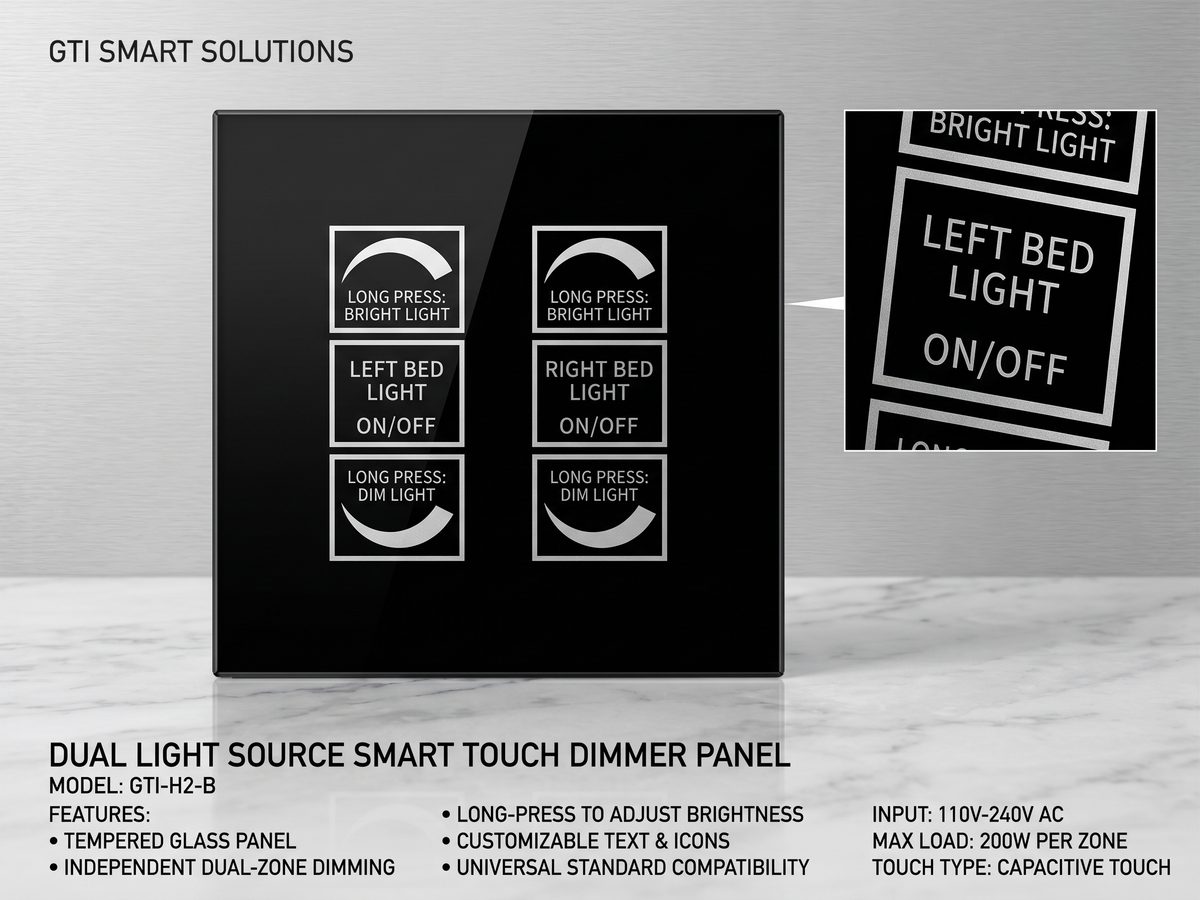
Room Automation System
A room automation system links lighting, climate, and door signage so a hotel room responds to occupancy and saves energy without guest effort.
Qualification facts buyers can extract quickly
A room automation system links lighting, climate, and door signage so a hotel room responds to occupancy and saves energy without guest effort.
- Use cases
- Guest room lighting, curtain, and climate control, Door sign and privacy state automation, Energy saving across vacant and checked-out rooms
- Certifications
- CE, RoHS, ISO 9001
- Served markets
- United States, United Kingdom, Canada, Australia, Singapore, Germany
- Next step
- Keep sector context tied to specific product and validation requirements.
Overview of Room Automation System
A room automation system is the network that lets a hotel room control its own lighting, climate, and signage from occupancy and schedule. A room automation system removes the waste of a lit, cooled room that no one occupies. A room automation system starts at the door, where a sign and sensor tell the room whether a guest is present.
The room automation system category covers the panel, sensors, gateway, and signs that make a room smart. A room automation system can dim lights and set temperature when the door reads vacant, then restore comfort on return. A room automation system that drives the door plate shows privacy and cleaning state without a staff call.
Buyers size a room automation system by rooms, integrations, and how much they want centralized. A room automation system on Wi-Fi or Bluetooth meshes with the existing network, avoiding a rewire. For a hotel, a room automation system is the path from manual switches to a room that manages itself.
Key Applications of Room Automation System
A room automation system touches the whole guest stay:
- Lighting and curtains run on a room automation system tied to occupancy.
- Climate drops to setback when a room automation system sees the room empty.
- The door plate shows privacy and clean state from the room automation system.
- Housekeeping gets alerts when a room automation system reports checkout.
- Managers tune energy by floor through the room automation system console.
In each case a room automation system turns separate devices into one behavior.
Why Choose Room Automation System
A room automation system pays back through energy and labor. When a room automation system sets back empty rooms, power cost falls with no guest notice. A room automation system also speeds turnover, because cleaning state reaches the desk the moment it changes.
A room automation system from one OEM partner means the panel, sensor, and sign share protocols. A room automation system with a clear door indicator also improves the guest sense of control. A room automation system that supports multiple languages helps hotels in Singapore, Germany, and the United Kingdom. A room automation system with dimmable signs keeps corridors calm at night.
Material and Compliance Options for Room Automation System
A room automation system uses anodized aluminum or ABS panels with sealed, cleanable fronts. The signs in a room automation system have anti-glare displays rated for corridor light. A room automation system runs on low voltage or PoE, with battery options where wiring is hard.
Our room automation system products carry CE and RoHS marks and are built under ISO 9001. Where access rules apply, a room automation system sign can sit beside a tactile ADA name plate. A room automation system over e-ink fits no-wire spots; LED fits dark corridors needing contrast.
Procurement Notes for Room Automation System
We deliver a room automation system for hotel groups and distributors through OEM and ODM. Standard room automation system kits start at 50 rooms, with MOQ open for branded work. Samples of a room automation system ship in 7 to 10 days; mass production takes 20 to 30 days after design and integration approval.
A room automation system order leaves Shenzhen (Yantian or Shekou) under FOB, CIF, DDP, or EXW. Core markets for a room automation system are the United States, United Kingdom, Canada, Australia, Singapore, and Germany. With monthly capacity above 100,000 pieces, a property-wide room automation system rollout ships on schedule. Payment is T/T 30% deposit and 70% before shipment, L/C at sight, or Trade Assurance.
Turn industry fit into a qualified project brief
Once buyers see that your process matches their vertical, they should be able to move immediately into the right product or RFQ route.
- Keep sector context tied to specific product and validation requirements.
- Use supporting resources to reduce sourcing-team uncertainty before RFQ.
- Show a clear route from industry fit to commercial action.